




By Sylva OBASI
Notable shipowner and former Chapter President of the African Shipowners Association (ASA), Captain Ladi Olubowale, has said that the $25 million facility under the Cabotage Vessel Financing Fund (CVFF) could be sufficient to acquire a sizeable vessel if the financing is tied to identifiable cargo and long-term trade contracts.
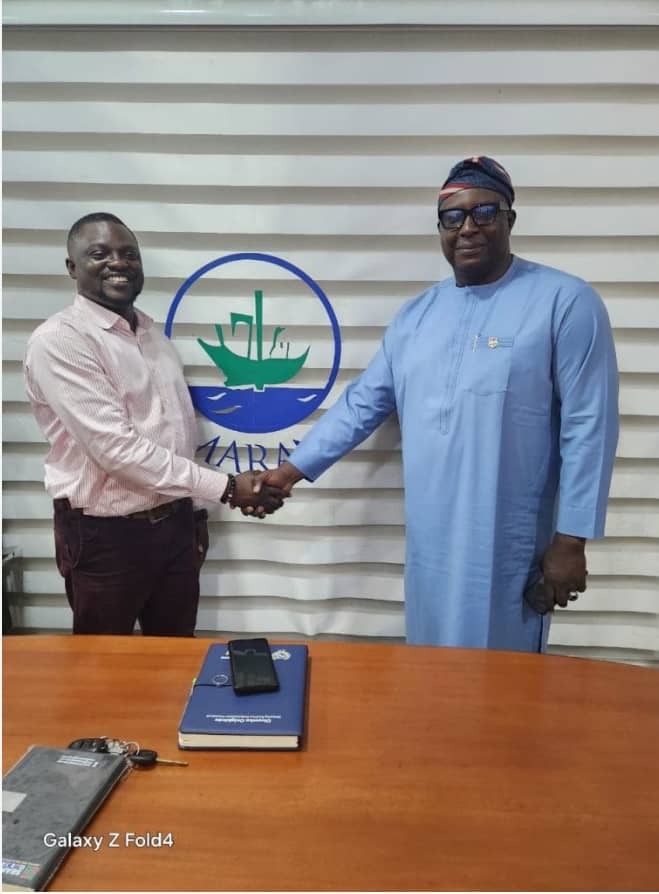
Olubowale stated this at the Maritime Reporters Association of Nigeria (MARAN) Roundtable on Monday, where he argued that the success of the CVFF should not be measured merely by the amount allocated to individual shipowners, but by the ability of beneficiaries to link vessel acquisition to viable commercial opportunities.
According to him, guaranteed cargo and long-term trade contracts would enable shipowners to acquire appropriate vessels, generate revenue from their operations and repay the financing.
He said the Nigerian Maritime Administration and Safety Agency (NIMASA) had indicated that applicants would be required to provide about $3.7 million in equity to access financing of up to $25 million, but stressed that the critical consideration should be the trade the vessel would serve.
“NIMASA wants you to bring out $3.7 million in order for you to be able to attract $25 million. They will now look at it in your own case. What trade will you be using that for?” he said.
Olubowale explained that the $25 million facility should not be considered in isolation, noting that different categories of vessels are designed to serve specific cargo requirements.
He urged the government and industry stakeholders to first identify the volume and nature of cargo available in Nigeria and then match such cargo with the appropriate vessels before approving CVFF financing.
Citing dry cargo, cement and other commodities, he said each trade required vessels specifically suited to its operational needs, warning against financing vessel acquisition without first establishing the commercial demand that would sustain the investment.
The shipowner said a properly structured $25 million facility could enable an operator to acquire a vessel dedicated to a specific trade, particularly where a one- or two-year contract guaranteeing cargo is already in place.
He noted that revenue generated from such contracts could be used to service and repay the financing, thereby making the vessel commercially viable and reducing the risk associated with ship acquisition.
Olubowale further called for the CVFF to be deployed as part of a broader national fleet development strategy rather than being treated solely as a financing scheme for individual shipowners.
According to him, with an estimated $700 million currently available in the fund, Nigeria could develop a national fleet covering various cargo segments if the resources were strategically deployed with the guidance of experienced industry professionals.
“Most of this shipping does not require a big capital. It requires you have a 10 per cent deposit as long as you trade to cover up that money,” he said.
He argued that guaranteed trade would significantly improve the viability of CVFF-backed vessel acquisition and provide a clear repayment structure for lenders.

Olubowale also disclosed that several banks had approached his company regarding the CVFF, with some presenting term sheets detailing financing requirements, equity contributions and other conditions.
He said the development represented a significant shift from previous years when shipowners frequently complained about the prolonged process of accessing the fund.
The shipowner maintained that the priority should now be to ensure that the CVFF delivers measurable economic benefits by expanding Nigeria’s indigenous fleet, creating opportunities for local shipowners and enabling Nigerian operators to capture a greater share of the country’s maritime trade.