





By Joshua Yousouph
Nigeria is losing between $20,000 and $70,000 daily to foreign-owned vessels operating in the country’s maritime trade, even as the country struggles to develop an indigenous fleet capable of carrying its growing cargo volumes.
Captain Ladi Olubowale, a maritime industry expert and shipowner, disclosed this at the Maritime Reporters Association of Nigeria (MARAN) Roundtable, where he identified inadequate indigenous shipping capacity and the absence of a strategic national fleet plan as major challenges confronting Nigeria’s shipping industry.
Capt. Olubowale who was the former Chapter President of the African Shipowners Association (ASA) said the huge financial leakages were occurring because foreign vessels were taking advantage of opportunities created by Nigeria’s cargo and oil trade, stressing that the country needed to urgently determine the types of vessels required to serve its different cargo segments.
According to him, Nigeria’s inability to develop a strategic fleet has become particularly evident in the tanker sector, where the country lacks some of the vessels required by oil terminals and other cargo owners.
He noted that vessel acquisition should not be approached simply as a financing exercise, arguing that ships must be acquired based on identifiable cargo and long-term trade contracts capable of generating revenue.
“Nobody buys ships without a trade,” Olubowale stressed, explaining that ship finance globally is tied to trade because long-term cargo contracts provide the business required to sustain vessel operations and repay financing.
He therefore called for a strategic fleet analysis to determine the vessels Nigeria needs and the cargoes they would carry, rather than disbursing financing to individual operators without a holistic understanding of the country’s shipping requirements.
Capt. Olubowale also linked the challenge to the implementation of the Cabotage Vessel Financing Fund (CVFF), arguing that the fund could contribute significantly to the development of a national fleet if deployed strategically.

He disclosed that his company had applied for the CVFF and that several banks had recently approached the company over the financing, with banks providing term sheets outlining equity contributions and other requirements.
The shipowner argued that the estimated $700 million fund should not merely be viewed as money for individual ship purchases but as an opportunity to develop a national fleet covering both dry and liquid cargo sectors.
According to him, about $25 million could be sufficient to acquire a sizeable vessel when properly matched with a specific trade opportunity and backed by a cargo contract.
He said the industry needed to change the narrative that ship ownership necessarily required enormous capital, noting that the availability of cargo and a guaranteed trade could help drive vessel financing and repayment.
Capt. Olubowale further argued that the government’s role should be to create the enabling environment, while the private sector and shipping professionals should drive vessel ownership and fleet development.
He said Nigeria could not achieve a sustainable national fleet by merely announcing policies and agreements without measuring their economic value and determining how Nigerian shipowners could participate in the resulting trade opportunities.
The maritime expert also called for stronger coordination between regulators and industry stakeholders, saying regulatory agencies should focus on safety, compliance and creating an enabling environment, while the private sector should drive the commercial development of the industry.
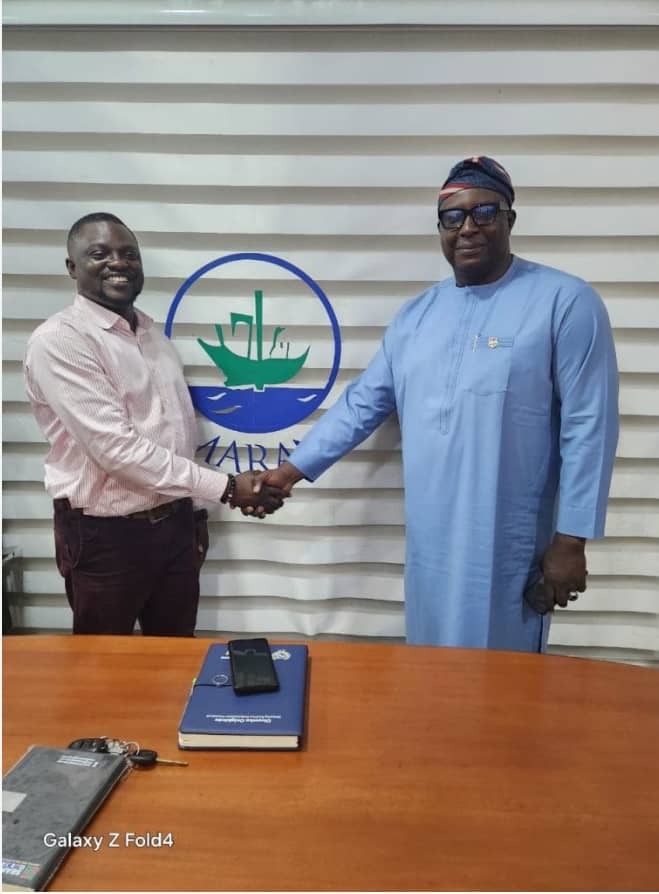
Capt. Olubowale said Nigeria’s various trade agreements, projects and maritime policies could create opportunities for indigenous shipowners if cargo considerations were incorporated into the planning process.
He urged stakeholders to look beyond policy announcements and ask how many Nigerian-owned vessels were actually benefiting from such initiatives and how much economic value they were generating.
“From January to date, what are the economic value of this thing?” he asked, stressing the need for measurable outcomes from government interventions in the maritime sector.